For most of my adult life, I haven’t slept well—difficulty falling asleep, waking up at night, and sluggish mornings. So this month, I’m running a 30-day challenge to finally fix that.
I straight-up love the motivation and excitement that comes with starting a new monthly challenge. I’m not starting until Friday night, but this one’s big, so I wanted to get the research done early instead of scrambling at the last minute.
I’m not expecting this month to be transformational in the typical sense of that word, but I do expect it to improve my sleep patterns over time. I’m hoping the rejuvenation, focus, and ease come along for the ride—even if they show up later.
I recently finished reading Why We Sleep by Matthew Walker. It’s a research-heavy book and definitely not light reading, but alongside its deep dive into sleep science, it also includes practical sleep hygiene tips near the end. It gave me both the “why” and a solid starting point for the “how.”
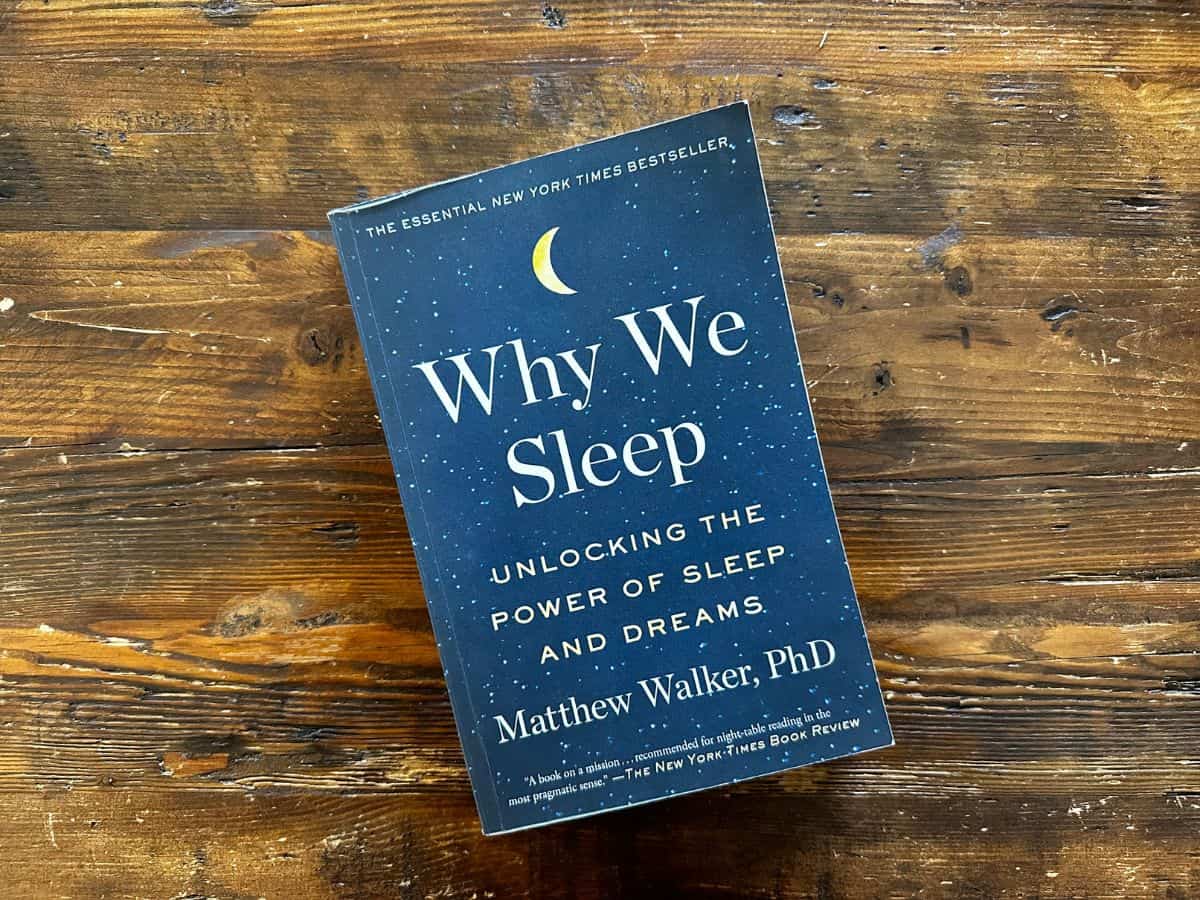
I’ve also listened to the Sleep Doctor on a couple of unrelated podcasts. Most of the inspiration and practical suggestions for this challenge come from either the book or those interviews. The number one rule both emphasize is getting up at the same time every day—which I’ve already locked in for the most part. Consistency on wake time seems to be the anchor for everything else.
My basic hypothesis is that consistent wake time, strong morning light exposure, and reduced evening stimulation will stabilize my circadian rhythm and improve both sleep quality and morning energy. Simple inputs, better outputs.
Sometime this week, before the challenge officially begins, I’d like to take a sleep chronotype quiz—mainly just to say I did it, since I’m already fairly certain I’m a lion (early riser). I’ve also purchased several items that will support this experiment: a bedside lamp, smart bulbs, a bedside speaker, percale cotton sheets, and a curtain rod plus brackets and screws. The goal is to set the environment up to make better decisions easier.
Without further ado, here are the specifics of the challenge, broken into a few categories: general daytime rules, pre-sleep routine (starting one hour before bed), bedtime protocol, and the first 1.5 hours after waking.
General Rules (Daytime + Evening Boundaries)
- Hang blackout curtains – I’ll install these in my bedroom before Friday night.
- Move Wi-Fi router – Not part of an EMF concern for this challenge, but moving it a bit farther from the bed can’t hurt. It also frees up space for my morning lamp setup.
- Install smart bulbs – For my two lamps (study and living room) and the kitchen overhead light. I’ll set them to dim and warm automatically around 8pm.
- No chocolate or caffeine after lunch – Caffeine takes about six hours to fully clear, so lunch is a natural cutoff point.
- Set devices to night lighting at 8pm – Computer night light will be automated. On my phone, I’ll switch to extra dim and night light settings manually. Bedtime grayscale is optional.
- No exercise after 8pm – This means getting it done shortly after arriving home or soon after dinner.
- No eating after 8pm – If I want my usual yogurt with raisins and blueberries, it needs to happen by 7:50.
- No drinking after 8pm – Exceptions only for pills or tea if I’m sick.
Pre-Sleep Routine (Starting ~1 Hour Before Bed)
- Save dishes + cleanup for wind-down – Instead of cleaning right after dinner, I’ll soak dishes and handle them as part of my evening wind-down. Light organization tasks can also shift here.
- Move reading to wind-down time (workdays) – I’ll avoid reading earlier in the day so it becomes part of the evening routine. Up to 30 minutes allowed if desired.
- Hot shower – A hot shower (bath is recommended in the research, but I’m choosing showers instead) at least one hour before bed to help body temperature drop afterward.
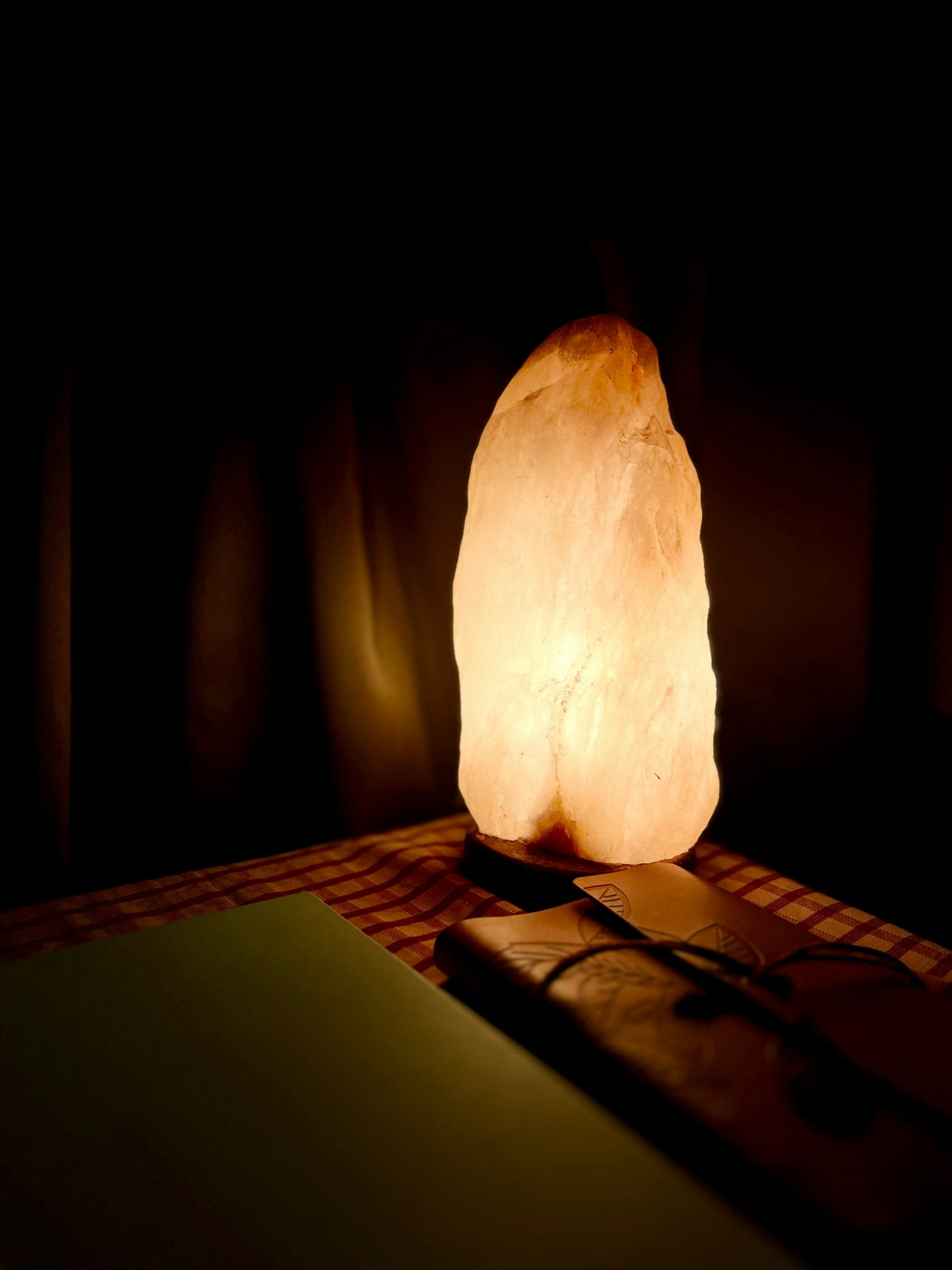
- Only salt lamp after shower – The salt lamp will be the only light source in the bedroom after my shower.
- Room temperature: 68°F – Thermostat set one hour before bed and held overnight.
- No videos, research, work, or social media – After the shower, I can still use my computer, BUT only for email, calendar, or basic low-stimulation tasks.
- Magnesium spray – Use 15 minutes before bed.
- No screens in last 15 minutes – This includes phone. Gratitude journaling and podcast setup must be done before this cutoff.
Sleep Protocol (Bedtime + Night Wakings)
- In bed by 10pm latest – I will aim for 9:40pm, which gives me a 20-minute buffer.
- No screens in bed – Phone stays on nightstand; no watching anything in bed.
- Yoga nidra / breathing practice – 4-second in-breath, 6–8-second out-breath, for 10–20 breaths when getting into bed and during night awakenings. I can expand or adjust over time.
- Check nightstand speaker setup – Make sure it is secured and properly aimed before sleep.
- Mindset for wakefulness – Instead of fighting wakefulness, I’ll treat yoga nidra as “partial sleep benefit.” The goal is to stay calm and restful rather than force sleep. If needed, I’ll keep a book nearby for especially stubborn nights.
Post-Sleep Routine
- Bright light immediately upon waking – Switch to regular lamp or overhead lighting right away.
- Cold finish to shower – Last ~30 seconds of morning shower will be cold exposure.
- Hydrate before you caffeinate – Phrase used by the Sleep Doctor; water first thing in the morning, then caffeine later (in my case, chocolate squares on the drive to work).
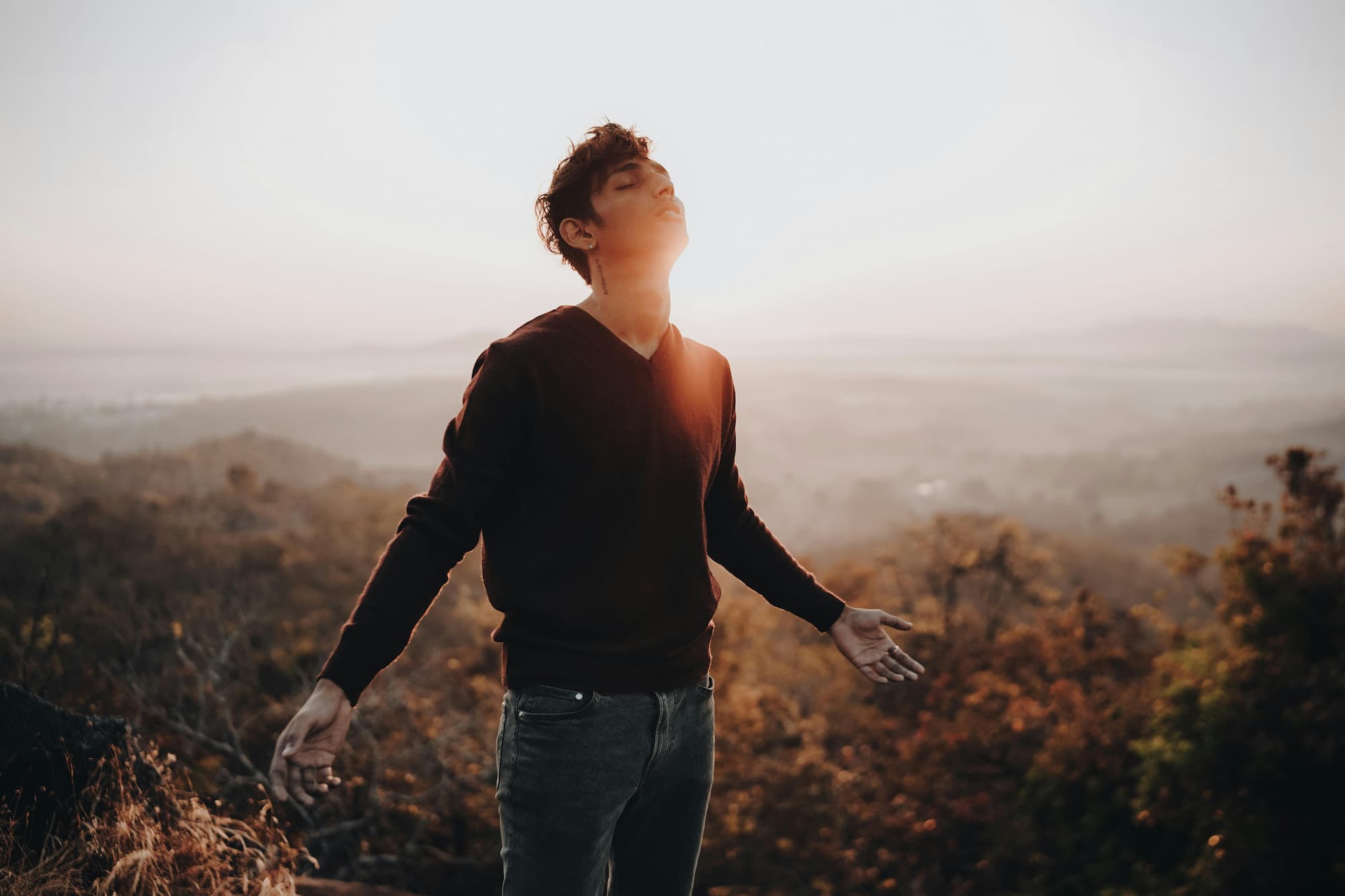
- Morning sunlight + standing meditation – Leave ~10 minutes earlier for work and do standing meditation with eyes open, facing sunrise to anchor circadian rhythm.
Minimum Viable Version (If the Day Goes Sideways)
If I do nothing else, I will still:
- Wake up at the same time.
- Get morning light in my eyes.
- Avoid caffeine after lunch.
- Be in bed by ~10pm.
Everything else is a bonus.
Closing Thought
This month isn’t about optimization—it’s about consistency. I’m building a stable foundation first, then evaluating what actually moves the needle afterward.
I may add more structured tracking after the challenge ends if it feels useful, but for now the focus is intentionally on habit formation rather than measurement. I’ll still record basic karma points, but I’m not trying to analyze in real time.
I’m also intentionally not making any major changes to sleep medications or supplements during this challenge. That’s something I can evaluate separately afterward once these habits are more stable.
Here’s to building a more consistent foundation for sleep, energy, and everything that follows.
Namaste.