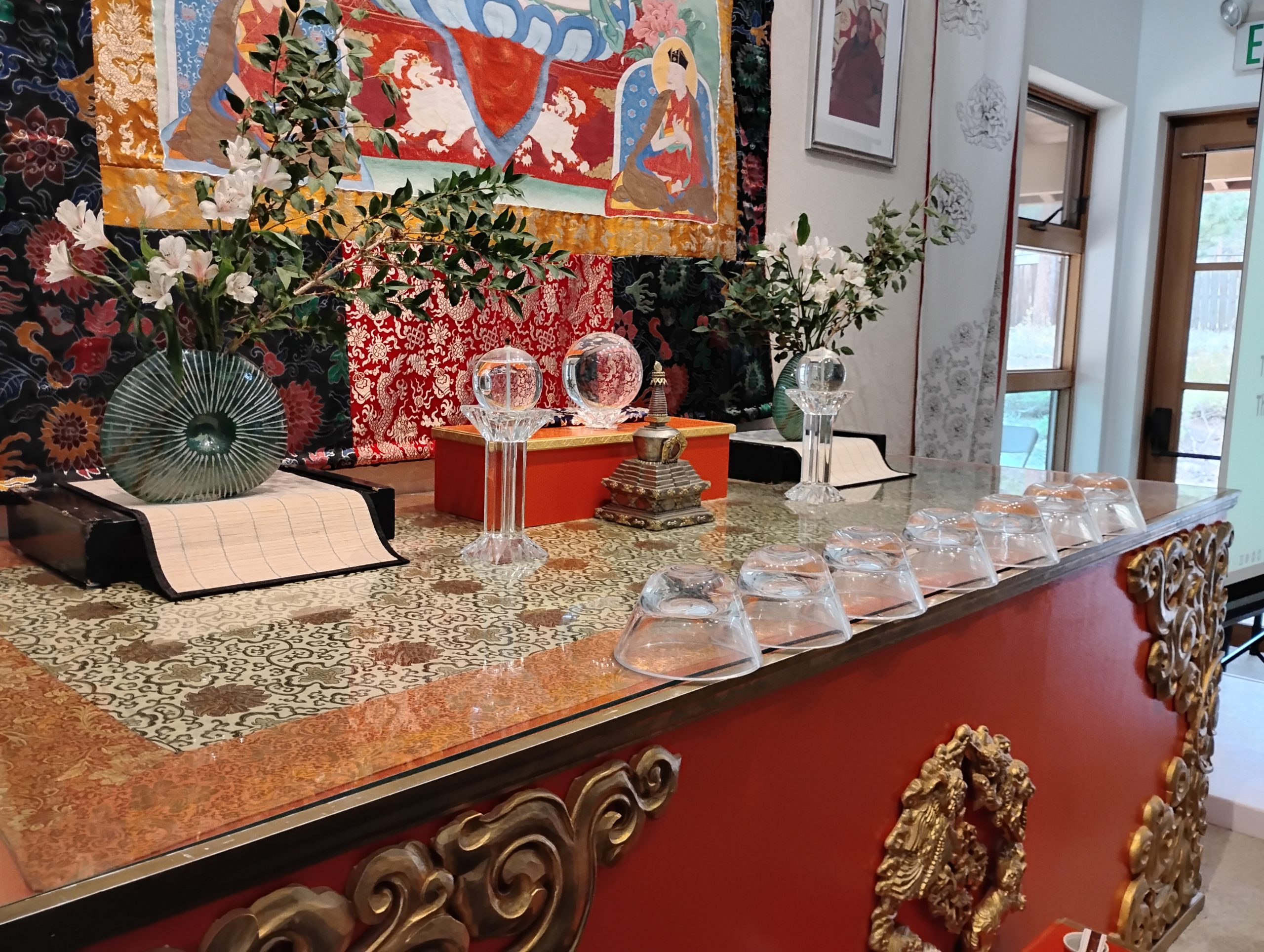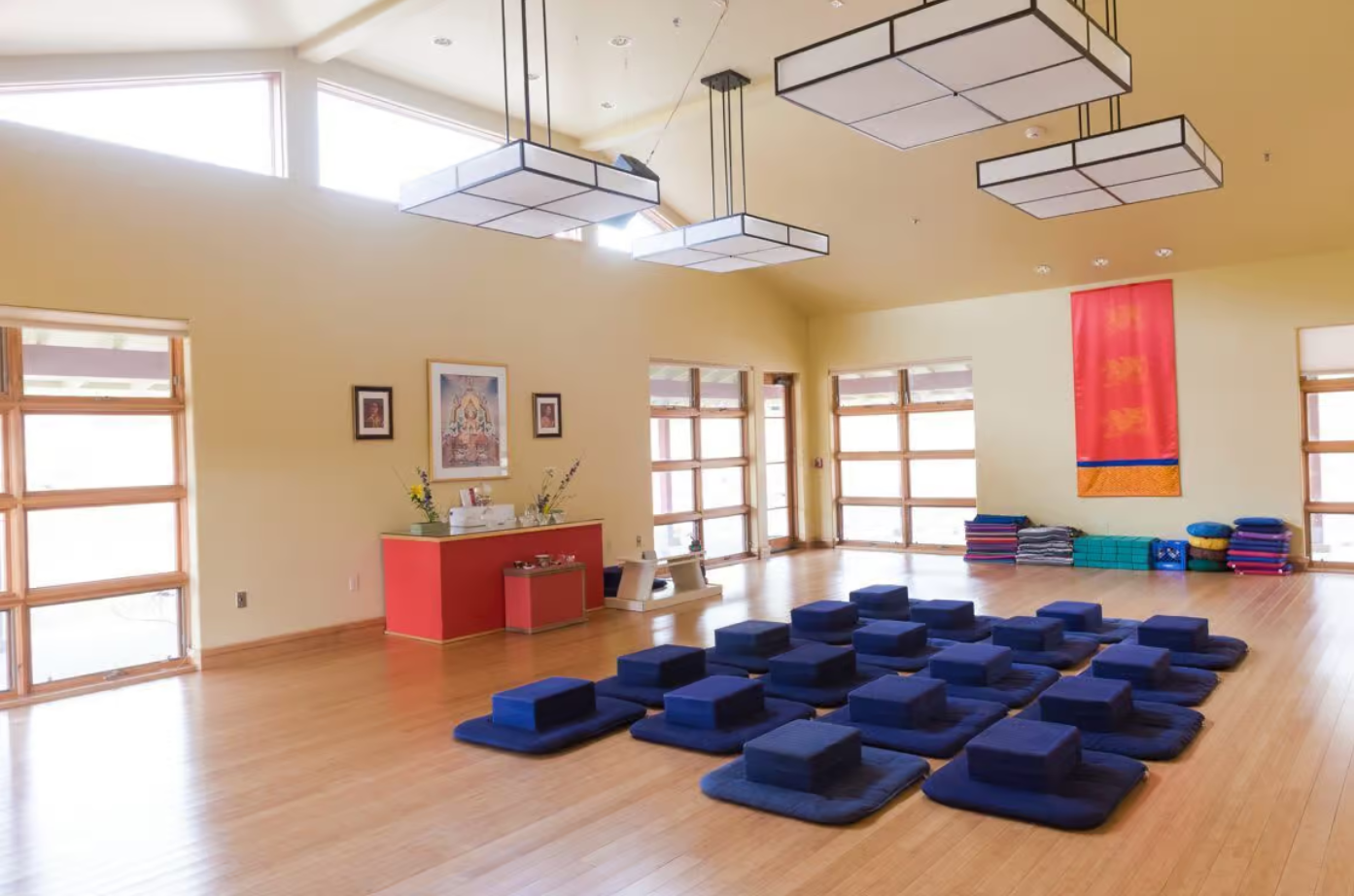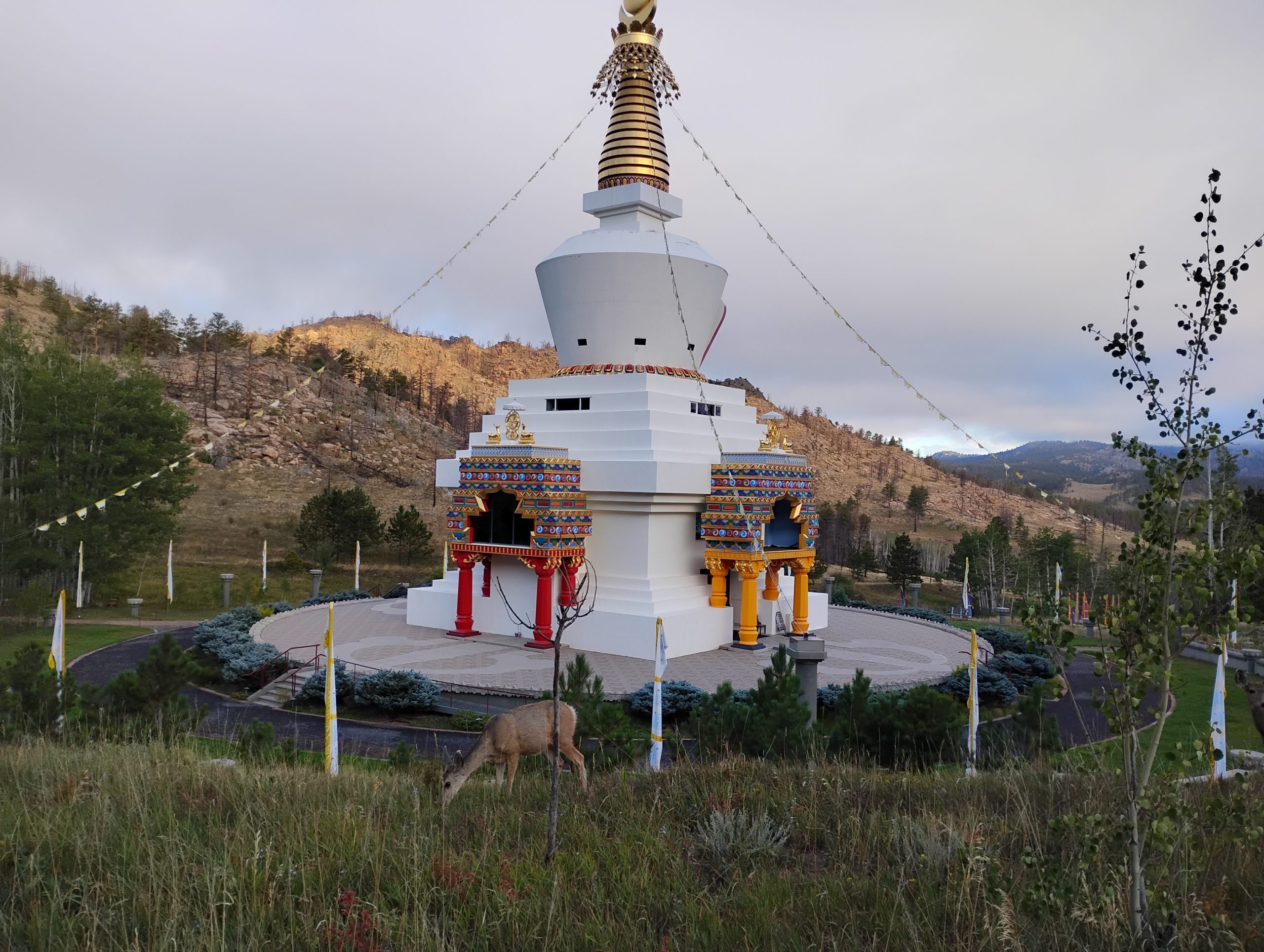
I was sitting in the Great Stupa, staring at the golden Buddha statue and feeling some discomfort from the communal meditation cushion. As I sat with my breathing and noticed my thoughts and sensations, I began to feel a sense of lightness and liberation. My attention expanded beyond my body to the energy of the room, and I felt less like a distinct physical object. After resting in this space for a while, my attention returned to my body. I finished my meditation, bowed to the Buddha, and quietly left.
This was an experience of the Divine.
A few weeks ago I was faced with a series of unpleasant and seemingly unsolvable problems and obligations. Eventually, I released my need to fix them. I sat on my couch, accepted that I didn’t have the answers, and repeated my uncertainty mantra dozens—possibly hundreds—of times. Eventually, I encountered a profound calm and moved through the rest of the day incredibly present, temporarily released from my addiction to getting everything done and always being prepared.
This, too, was an experience of the Divine.
What exactly do I mean when I call two such different moments experiences of the Divine?
A Shift in Focus
In an earlier post, I used the term Transpersonal Panendeism and spent some time breaking down what I meant by it. I don’t think my underlying perspective has changed all that much since then. What has changed is the language I find most useful for describing it. My current preferred term is Experiential Panentheism.
The shift from deism to theism is intentional. I don’t think I align with the usual understanding of deism and its emphasis on a non-interventionist God. For me, the Divine has to be, if nothing else, ever-present—not some aloof first cause. I was largely attracted to deistic language because it avoided any association with supernatural causation concerning physical phenomena, which I find unhelpful. However, I’ve come to realize that my concern in that regard was a distraction from what is actually at the heart of my perspective: experience.
The Divine is whatever ultimately underlies the richness, depth, and wonder of existence. This is as minimal a definition as I can think of that still communicates something meaningful. I hesitate to define it any further. I think the admonition in the Tao Te Ching is relevant: “The Tao that can be named is not the real Tao.” My understanding of the Divine conforms with this sentiment.
And this is where Experiential becomes important. I believe the Divine, whatever its ultimate nature, is something that can only truly be experienced, not defined. Language and description, however rich, can never fully capture what existence ultimately is—or whether it has anything that could meaningfully be called an ultimate purpose.
Experiential Panentheism therefore gives me permission to speak boldly about experience while remaining humble about explanation. At its simplest, it means that everything exists in and participates in the Divine, AND the Divine is something “more”—a depth and wonder within existence that can be directly experienced.
What This Gives Me
For one thing, it leaves a lot of intellectual space open. It gives me room for concepts like the eternal conscious mindstream and the karmic effects of conscious beings without requiring me to claim that they are necessarily features of physical reality. It also allows me to inhabit consciousness-centered perspectives such as panpsychism and idealism—to experience and interpret the world through those lenses when they are useful—without requiring me to commit to them as descriptions of reality. I find certain Hindu conceptions of the Universal Self closely aligned with my experience of the Divine. More broadly, I can remain generally agnostic about the ultimate nature of the universe without giving up a framework for spiritual practice.
Another benefit is having something I can call out to or align with that is more than simply “nature.” The Divine is not inherently mystical—though an experience of it certainly can be; it can be experienced just as readily in the so-called mundane aspects of life. This perspective offers endless possibility without requiring an ideological commitment to a belief system that would feel limiting or inadequate. I love Secular Buddhism, but without some component like this, it can feel kind of clinical to me. That is the opposite of what I want my practice to be—and the opposite of what it has blossomed into over the last couple of years.
A Language for Experience
Experiential Panentheism also gives me a richer vocabulary for describing that practice. When I say that I feel, invite, or inhabit the Divine, I am describing the experience as I encounter it, not claiming to explain what is objectively occurring.
- When walking meditation changes my relationship with pain until it becomes simply another phenomenon rather than something happening to me, I feel the Divine.
- When I yell “Yahuwah” at the top of my lungs as part of my consciousness focusing practice and experience a shift in consciousness, I invite the Divine.
- When meditation brings that airy feeling of oneness or ultimate connection and the permanence of self briefly falls away, I inhabit the Divine.
This language lets me express those experiences without mistaking a narration of experience for a description of reality.
Without Borders
In many ways, this also helps explain why I enjoy my Unitarian Universalist fellowship so much. Individual members hold widely varying beliefs—or no particular beliefs—about theology, yet the community leaves room for this kind of exploration. The catchphrase I often use to describe our fellowship is:
“Seeking the experience of the Divine without borders.”
I wholeheartedly release the reticence I once had about claiming experiences of the Divine. These experiences are subjectively real for me, and this language provides a useful on-ramp to mystical experience and a broader sense of well-being. I don’t require this belief—or any particular belief—of anyone else.
I can embrace these experiences for what they are, remain humble about what they ultimately mean, and be grateful for opportunities to share them, however incomplete my words may be.
Namaste.
 On Thursday night, we heard the story of the