Author Archives: Dan

One Month of Standing Meditation (Reflection)

A month ago, I set out to explore standing meditation with two goals in mind: to become more physically comfortable while standing and to develop a more mindful way of occupying moments that would otherwise feel restless or draining. After four weeks of daily practice, I’ve found that not only were those goals met, but the benefits extended further than I expected.


What I learned:

  • Hard at first, then easy – My back felt very uncomfortable when I first started, even though I was only practicing for four minutes each day. After about a week, the discomfort began to recede, and within a couple of weeks it was barely noticeable.
  • Hated it at first, now love it – The first few days felt incredibly awkward—not just physically, but mentally as well. However, much like with walking meditation, sitting with that resistance eventually caused it to dissolve. Now, I genuinely enjoy every minute of this practice, perhaps even more so than seated meditation.
  • The most powerful meditation posture – Seated meditation feels the most equanimous. Walking meditation feels the most refreshing. Standing meditation, though, carries a distinct sense of energy—almost a quiet power. I’ve also found it much easier to tap into this feeling in everyday situations when I’m already on my feet.
  • Didn’t need guidance – I considered using guided meditation, especially as the sessions grew longer. Surprisingly, the opposite proved true: focus came more easily and naturally without guidance. What I expected to be a support may have actually become a distraction.

What I want to do going forward:

  • Maintain 10 minutes daily – I’m folding this into my morning routine alongside my sleep challenge and plan to continue it even after that concludes. This practice leaves me feeling both energized and grounded.
  • Refine mini-sessions with breathwork – Thirty seconds can sometimes feel too long, especially while monitoring students. Shorter sessions—around 20 seconds—paired with intentional breathing (“spirit breath”) seem like a more practical and effective way to reconnect with mindful awareness in the moment.
  • Explore other forms of meditation – After such positive experiences with walking and standing meditation, I’m curious about other approaches I may have overlooked. I’ve long been interested in martial arts, and something gentle and meditative like Tai Chi could be a natural next step.

One huge benefit I’ve noticed since starting this practice is a general but noticeable reduction in awkwardness when standing in lines or waiting for something. For example, I recently went to the post office to return some Stitch Fix clothing, and there was a line. Normally, I would immediately become fidgety, but instead I settled into a lower dantian position and found my mind castle. Another moment came during an awards ceremony. All of the teachers were standing at the front—usually a situation where I feel somewhat self-conscious—but this time there was a sense of confident calmness, and I felt more at ease.

I believe everyone can benefit from meditation, whether through mindfulness or concentration. The key is finding the form and posture that resonate with you. The options are broader—and more adaptable—than most people realize.

Namaste.

The 30-Day Sleep Challenge: Rebuilding My Nights (and Mornings)

For most of my adult life, I haven’t slept well—difficulty falling asleep, waking up at night, and sluggish mornings. So this month, I’m running a 30-day challenge to finally fix that.

I straight-up love the motivation and excitement that comes with starting a new monthly challenge. I’m not starting until Friday night, but this one’s big, so I wanted to get the research done early instead of scrambling at the last minute.

I’m not expecting this month to be transformational in the typical sense of that word, but I do expect it to improve my sleep patterns over time. I’m hoping the rejuvenation, focus, and ease come along for the ride—even if they show up later.

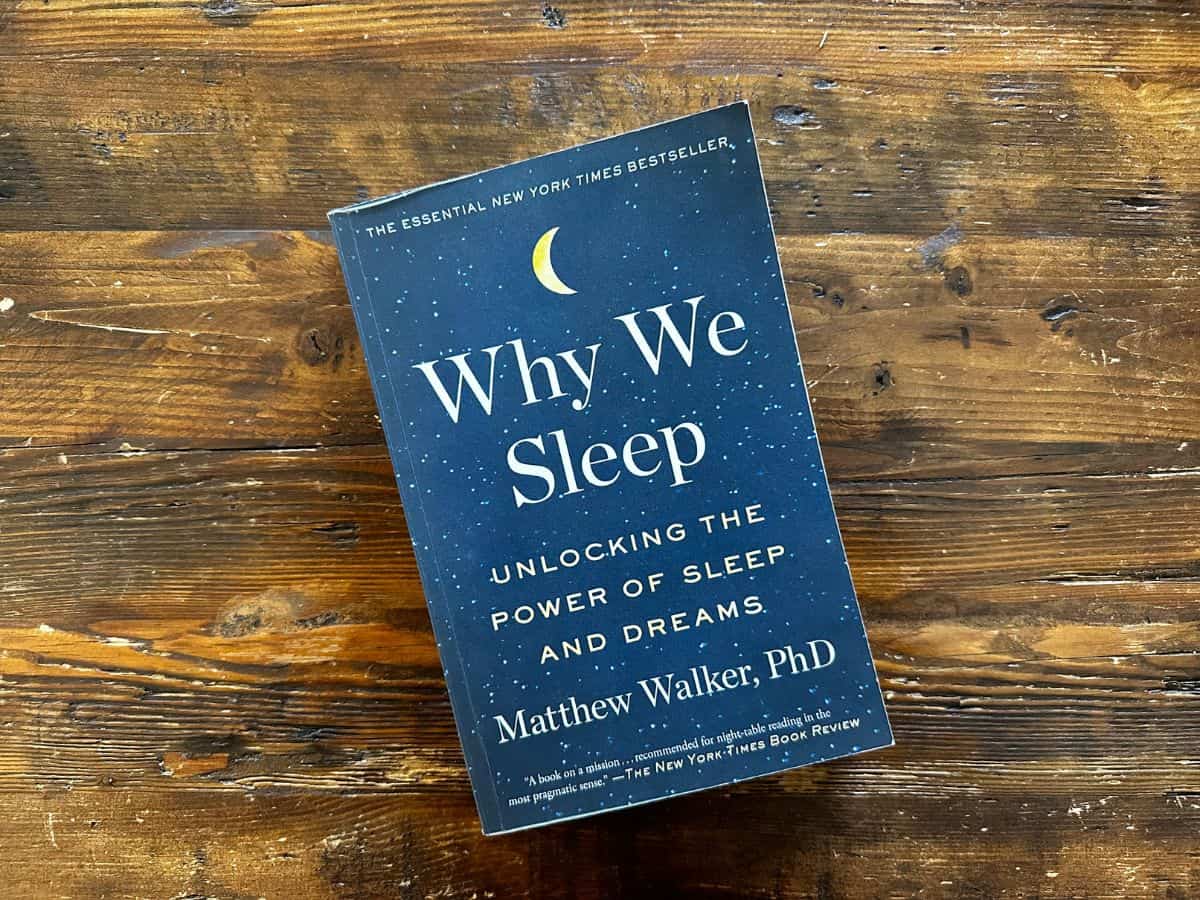
I recently finished reading Why We Sleep by Matthew Walker. It’s a research-heavy book and definitely not light reading, but alongside its deep dive into sleep science, it also includes practical sleep hygiene tips near the end. It gave me both the “why” and a solid starting point for the “how.”

Why We Sleep Summary

I’ve also listened to the Sleep Doctor on a couple of unrelated podcasts. Most of the inspiration and practical suggestions for this challenge come from either the book or those interviews. The number one rule both emphasize is getting up at the same time every day—which I’ve already locked in for the most part. Consistency on wake time seems to be the anchor for everything else.

My basic hypothesis is that consistent wake time, strong morning light exposure, and reduced evening stimulation will stabilize my circadian rhythm and improve both sleep quality and morning energy. Simple inputs, better outputs.

Sometime this week, before the challenge officially begins, I’d like to take a sleep chronotype quiz—mainly just to say I did it, since I’m already fairly certain I’m a lion (early riser). I’ve also purchased several items that will support this experiment: a bedside lamp, smart bulbs, a bedside speaker, percale cotton sheets, and a curtain rod plus brackets and screws. The goal is to set the environment up to make better decisions easier.

Without further ado, here are the specifics of the challenge, broken into a few categories: general daytime rules, pre-sleep routine (starting one hour before bed), bedtime protocol, and the first 1.5 hours after waking.


General Rules (Daytime + Evening Boundaries)

  • Hang blackout curtains – I’ll install these in my bedroom before Friday night.
  • Move Wi-Fi router – Not part of an EMF concern for this challenge, but moving it a bit farther from the bed can’t hurt. It also frees up space for my morning lamp setup.
  • Install smart bulbs – For my two lamps (study and living room) and the kitchen overhead light. I’ll set them to dim and warm automatically around 8pm.
  • No chocolate or caffeine after lunch – Caffeine takes about six hours to fully clear, so lunch is a natural cutoff point.
  • Set devices to night lighting at 8pm – Computer night light will be automated. On my phone, I’ll switch to extra dim and night light settings manually. Bedtime grayscale is optional.
  • No exercise after 8pm – This means getting it done shortly after arriving home or soon after dinner.
  • No eating after 8pm – If I want my usual yogurt with raisins and blueberries, it needs to happen by 7:50.
  • No drinking after 8pm – Exceptions only for pills or tea if I’m sick.

Pre-Sleep Routine (Starting ~1 Hour Before Bed)

  • Save dishes + cleanup for wind-down – Instead of cleaning right after dinner, I’ll soak dishes and handle them as part of my evening wind-down. Light organization tasks can also shift here.
  • Move reading to wind-down time (workdays) – I’ll avoid reading earlier in the day so it becomes part of the evening routine. Up to 30 minutes allowed if desired.
  • Hot shower – A hot shower (bath is recommended in the research, but I’m choosing showers instead) at least one hour before bed to help body temperature drop afterward.
  • Only salt lamp after shower – The salt lamp will be the only light source in the bedroom after my shower.
  • Room temperature: 68°F – Thermostat set one hour before bed and held overnight.
  • No videos, research, work, or social media – After the shower, I can still use my computer, BUT only for email, calendar, or basic low-stimulation tasks.
  • Magnesium spray – Use 15 minutes before bed.
  • No screens in last 15 minutes – This includes phone. Gratitude journaling and podcast setup must be done before this cutoff.

Sleep Protocol (Bedtime + Night Wakings)

  • In bed by 10pm latest – I will aim for 9:40pm, which gives me a 20-minute buffer.
  • No screens in bed – Phone stays on nightstand; no watching anything in bed.
  • Yoga nidra / breathing practice – 4-second in-breath, 6–8-second out-breath, for 10–20 breaths when getting into bed and during night awakenings. I can expand or adjust over time.
  • Check nightstand speaker setup – Make sure it is secured and properly aimed before sleep.
  • Mindset for wakefulness – Instead of fighting wakefulness, I’ll treat yoga nidra as “partial sleep benefit.” The goal is to stay calm and restful rather than force sleep. If needed, I’ll keep a book nearby for especially stubborn nights.

Post-Sleep Routine

  • Bright light immediately upon waking – Switch to regular lamp or overhead lighting right away.
  • Cold finish to shower – Last ~30 seconds of morning shower will be cold exposure.
  • Hydrate before you caffeinate – Phrase used by the Sleep Doctor; water first thing in the morning, then caffeine later (in my case, chocolate squares on the drive to work).
  • Morning sunlight + standing meditation – Leave ~10 minutes earlier for work and do standing meditation with eyes open, facing sunrise to anchor circadian rhythm.


Minimum Viable Version (If the Day Goes Sideways)

If I do nothing else, I will still:

  • Wake up at the same time.
  • Get morning light in my eyes.
  • Avoid caffeine after lunch.
  • Be in bed by ~10pm.

Everything else is a bonus.


Closing Thought

This month isn’t about optimization—it’s about consistency. I’m building a stable foundation first, then evaluating what actually moves the needle afterward.

I may add more structured tracking after the challenge ends if it feels useful, but for now the focus is intentionally on habit formation rather than measurement. I’ll still record basic karma points, but I’m not trying to analyze in real time.

I’m also intentionally not making any major changes to sleep medications or supplements during this challenge. That’s something I can evaluate separately afterward once these habits are more stable.

Here’s to building a more consistent foundation for sleep, energy, and everything that follows.

Namaste.

Impermanence and the Nature of the Divine

One of the most foundational ideas in Buddhism is that of impermanence.

It is one of the three universal truths and one of the three marks of existence. Everything—ourselves included—is in a constant state of change. This insight undergirds the central Buddhist claim that attachment leads to suffering. Why? Because everything we attach to is changing—and attachment to what changes inevitably leads to dissatisfaction when it no longer brings the same joy or disappears altogether.

Suffering.

The water carries away what was, leaving only the present moment.

This is a framework I have found to be true, sometimes painfully so. And yet, at the same time, I also hold a strong conviction about the presence and nature of the Divine.

So how do these coexist?

At first glance, they seem incompatible. If everything is impermanent, then what could the Divine possibly be? It would seem that if anything were to be permanent, it would be the Divine—the one enduring reality from which everything else flows.

This raises a sharper question: if all conditioned things are impermanent, is the Divine something conditioned—or is it not a “thing” at all in the same category?

I don’t have a fully satisfactory answer to that. But I do have a few ways of navigating the tension.


A Note on Doubt and Certainty

One idea I’ve always found interesting is the list of the five hindrances in Buddhism: lust, aversion, torpor, restlessness, and doubt.

The first four form two pairs of opposites:

  • Lust vs. Aversion
  • Torpor vs. Restlessness

But where is the opposite of doubt? Why isn’t certainty listed as one of the hindrances?

It’s not there—and I think there’s a reason for that.

In a framework where everything is in flux, absolute certainty becomes its own form of doubt. Because certainty implies a fixed, unchanging grasp of reality—and in a world where understanding is always evolving, that fixation is a subtle resistance to impermanence itself.

In that sense, certainty isn’t the cure for doubt. It may just be another version of it.


Practice Over Belief

The most practical way I’ve found to reconcile this tension is surprisingly simple: focus on practice over belief.

  • I can meditate without belief.
  • I can chant at my altar without belief.
  • I can use mantras, rituals, and even frameworks like karma without needing to fully affirm them intellectually.

And what I’ve noticed is this: the more immersed I am in these practices, the less I need the beliefs behind them—even if those beliefs were originally what drew me in.

This leads me to a possibility that feels increasingly true:

What if the reconciliation between impermanence and the Divine isn’t found in belief at all—but in practice?

The journey itself teaches more than any idea could.

Actively Challenging Belief

Twice a year, I try to do something that feels both uncomfortable and necessary: I deliberately subject my beliefs to critique—even ridicule.

This serves two purposes.

First, it strips away what is weak or ungrounded.
Second, it reveals whether what remains is genuine conviction or just intellectual curiosity.

If a belief can’t withstand pressure, it probably isn’t worth holding.


Beliefs Are Necessarily Incomplete

Another perspective that helps: all spiritual beliefs are, in some sense, wrong.

Not because they point to nothing—but because they can never fully capture what they point toward.

My understanding is always evolving. That means my beliefs must evolve too. Even if the Divine is real in some ultimate sense, my picture of it will always be partial, shifting, and incomplete.

So the goal isn’t to arrive at perfect belief—it’s to stay open to refinement.


Conviction Exists Only in the Present

I’ve also found it helpful to think of conviction as something that exists only in the present moment.

I can have confidence in my thoughts and actions right now. That conviction is real and valuable.

But it doesn’t need to extend indefinitely into the future to be valid. In fact, recognizing that it can’t do so helps anchor me more fully in the present, rather than projecting certainty into a future that hasn’t arrived.


God Does Not Have Beliefs

One thought experiment I return to often:

Does God have spiritual beliefs?

Whatever your conception of the Divine is—does it “believe” anything?

It seems strange to suggest that it would. If the Divine is truly all-encompassing, then it wouldn’t need beliefs. Beliefs are tools for navigating uncertainty. But if you are the totality of experience itself, there is nothing to interpret—only to be.

This reframes belief as something inherently human, not something ultimate.


The Limits of Explanation

All of this leads to a final question:

Can I imagine anything shaking my conviction about the Divine and pushing me into a strictly materialist framework?

Honestly, I don’t think so.

Not because I reject science, or wouldn’t accept its conclusions (quite the opposite, in fact)—but because this is not the kind of question science is designed to answer. Science operates within methodological naturalism, explaining the mechanisms of the observable world, while the question of the Divine is ultimately experiential rather than explanatory.

It seems to be a different kind of question altogether—one that ultimately involves not just intellect, but emotion, intuition, and will.


A Possible Resolution

If there is a resolution here, it may not come in the form of a clean philosophical answer.

It may look more like a shift in perspective.

Instead of seeing the Divine as something permanent that stands in opposition to impermanence, it may be more accurate to see it as something encountered through impermanence itself—not as a fixed object, but as something revealed in the very flow of experience.

And if that distinction between the material and the spiritual were to fully dissolve—if there were no longer two categories to reconcile at all—I suspect that may be what enlightenment is all about.

At that point, there would be no need to “experience the Divine” as something separate.

There would only be presence.

Namaste.

Meeting Life with Mantras

Following a depressive spiral at the beginning of this year, I started formulating and applying mantras to everyday situations. There is a mantra I learned from the book Self-Compassion by Kristin Neff that goes:

This is a moment of pain,
Pain is a part of life,
May I be kind to myself in this moment,
May I give myself the self-compassion I need.

She actually used the word “suffering,” but I prefer “pain,” since suffering carries a more specific, self-generated meaning in a Buddhist context. I’ve used this in many painful situations—mostly physical, but some emotional—and it has been very effective.

Recently, I wanted to more actively engage my belief in karma by integrating it into a mantra. One of the first I created focused on uncertainty, using a similar structure:

This is a moment of uncertainty,
Uncertainty is a part of life,
May I embrace the enlightenment of doubt,
May I accept this as an opportunity to maximize karma.

The first two lines depersonalize and normalize the experience. They create just enough distance to observe instead of react. The final line reflects my belief that difficulty is inherently meaningful when met with a skillful response.

This mantra worked so well in a few different situations—helping me find both acceptance and even a kind of joy, while also thinking more clearly about how to respond—that I started to wonder: why not do this all the time?

Since then, I’ve created 33 more variations for a wide range of emotions and sensations. The first two lines stay the same, with only the relevant emotion changing. I also made a more general version that includes the line: “May I choose gratitude in present awareness.” This works well when I can’t remember a specific mantra or don’t have one for the moment.

In doing this, I realized that the effectiveness of these mantras depends, to some degree, on the conviction of my spiritual beliefs—which does fluctuate at times. That led me to create a set of phrases I now chant regularly at my home altar. After significant reflection and refinement, here is my curated list:

  • Let me live to create and experience the Universal Self in its fullest expression.
  • Let me honor the appointed times of life by responding with presence and care.
  • Let me recognize that the mindstream I inhabit is eternal.
  • Let me act knowing that every choice generates consequence.
  • Let me trust that this consequence reaches beyond my body, touching the eternal flow.
  • Let me meet difficulty fully, knowing that the greater the pain and doubt, the deeper the ripples of karma and the fuller the invitation for presence.
  • Let me trust the middle way, even when I feel insufficient, knowing that presence now carries me where I need to go.
  • Let me honor spiritual practice as inherently worthy, claiming its value simply by participation and attention.
  • Let me practice repentance with courage, affirming it as the path that transforms destructive karma into the cause for awakening.

When chanting these, I pause after the third word. If I’m in the car or another setting and trying to steady my equanimity and resolve, I often just repeat the first three words of each phrase meditatively, trusting that the full meaning follows from prior practice.

I really can’t overstate the impact this has had on my life. It might sound like an exaggeration, but I genuinely feel invincible—not in the sense that I won’t experience pain or emotional discomfort, but in that I no longer fear them. It has become almost automatic to turn to a mantra when frustration, anxiety, or shame arise.

Almost immediately, I can settle into a bit more equanimity, respond more skillfully, and sometimes even find a sense of joy within the discomfort. At times, it feels like playing a challenging level in a video game or working through a difficult puzzle. The difficulty is still there—and still unpleasant in some ways—but it also becomes engaging: something to meet, rather than something done to me.

I’ve experienced glimpses of this mindset before through meditation, but this practice has brought it off the mat and into everyday life in a way that finally sticks.

Namaste.

Evaluation of My Months of Intentional Order

This challenge has honestly been one of the most transformational of any that I have done, but not in the usual way. Normally when I think of transformation, I think of mental framing or empowering beliefs.

My current transformation has been almost entirely physical. I can actually enjoy just walking around my living space or classroom because I don’t see or imagine clutter everywhere. Here is what I learned from the challenge:

  • The Clutterbug podcast is awesome! – When I started this challenge, I subscribed to a few different podcasts I found by typing “order” in the search bar. One was about room design and architecture – not needed. One was 5-minute practical house ordering tips – not mindset-focused. Clutterbug was exactly the ticket: practical suggestions, mindset frames, tough love, and an engaging personality. I do know that the listener demographics are 99.9% female, but I’m happy to be one of the 5 males that listens and benefits.
    Clutterbug - Real-Life Hacks and Tips to Declutter, Organize and Clean your Home Fast - Podcast - Apple Podcasts
  • Very little effort now prevents massive stress later – The most salient feature of the challenge was the 2-minute rule: if a task takes less than 2 minutes, it MUST be done immediately. The extra 10-30 seconds it takes to put the keys into the drawer or hang the coat up or rinse out the Ziploc bags pays such huge dividends. No more rushing around the house wondering where my keys are or why my coat isn’t hung up or disgusted about a messy lunch box.
  • Do NOT wait to buy organizational products – Forcing myself to buy organizational aids was the biggest reason for my decluttering success. It is very easy (and even fun) to declutter and tidy an area when designating spots to put things is readily available. This is one category I will no longer allow myself to wait, research, and look for savings. My time and energy are getting sapped right now, and remedying that is worth more than avoiding potential regret or saving a few bucks.
  • Clean drawers provide a palpable sense of relaxation – After cleaning out and organizing my desk drawers both at home and my classroom, I noticed a meaningful reduction in my level of stress when doing work. I did not even know I was experiencing this sense of tension until it evaporated and I felt 2 pounds lighter and 10% more focused.
  • Shifting focus from an end result to a process is key – My previous default when attempting organization was something along the lines of “This room needs to look organized,” or “This shelf needs to be cleared out.” My goal was either too large or ill-defined, especially as someone that is not a natural declutterer. Smaller and more specific goals like “Put compartments in this drawer,” or “Spend 10 minutes on this shelving unit,” were effective because I could be proud of the effort even if the overall space still felt disorganized. This encouraged continued small effort which eventually produced the desired result.
  • When forced to stay organized, you naturally find or create systems that make it faster and easier – If I allow myself to only sometimes make the bed or only sometimes put up the laundry, then not only is my environment less tidy, but it takes me longer to do these tasks since there is no pressure to check them off. Requiring the bed to be made before I left my bedroom allowed me to stop trying to fix the top sheet and instead just drag it with the comforter and quickly fluff. Good enough! I finally stopped folding all of my underwear and workout shirts and instead got rid of some unused clothing and created a space where I could just throw them into the drawer. Good enough!
  • It all starts with the laundry and dishes – Initially I was uninterested in making these tasks central to the challenge. However, they do occupy the majority of my tidying time. Little things like less rinsing, more throwing things in the dishwasher, and using detergent sheets instead of powder for the laundry saves precious minutes – minutes that can then be used to tackle more serious clutter issues.

What I want to do going forward:

  • 5 minutes a day – This is what I want to commit each day to organization. Any time commitment is a sacrifice, since there are only 24 hours in each day. However, I have no doubts that this is worth the time, and a lot can be done in 5 minutes.
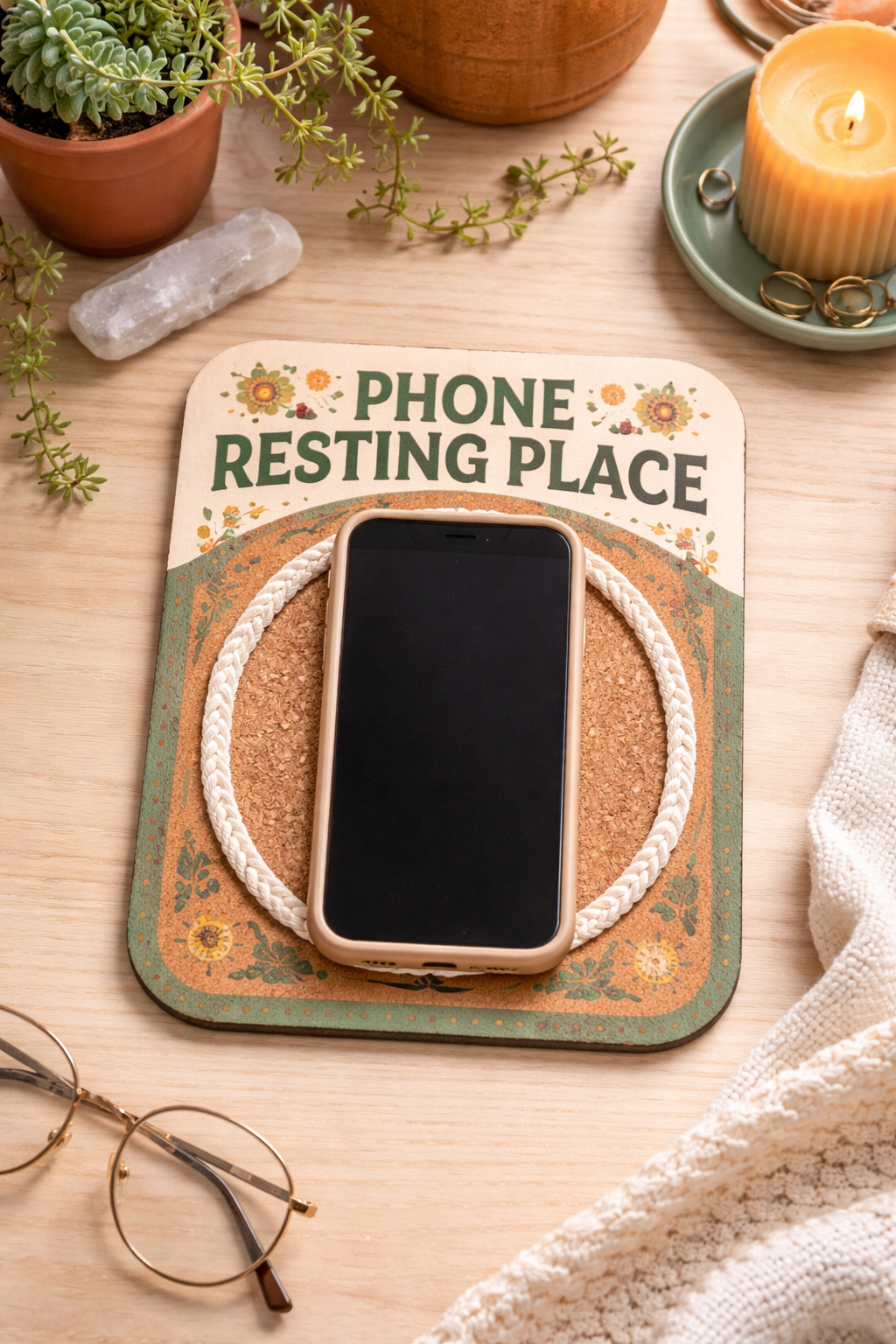
  • Visually designated phone areas – There are only 3 locations at my apartment and 2 locations in my classroom where I allow myself to drop my phone. However, I want to make this easier to abide by and also enjoyable by designing visual phone pit stops to reinforce this behavior.
  • 30-second rule – The 2-minute rule is great, but not always practicable. I don’t always have 2 minutes if in a rush to get out the door or deal with students. However, I can always make time for 30 seconds, especially if I put a little hustle into it.
  • Organization & Aesthetics minimum monthly budget – I have a very loose budget for my major expense categories. However, I have never had a line-item for organization (this was subsumed under household). I want this to change. Also, I want to establish a minimum amount I must spend or else donate to charity. I am not worried about over-spending, but I am worried about under-spending and this should help.
  • Purposely do one thing shitty each week – I often postpone organizational or cleaning projects because I don’t think I can complete them properly. But that is the problem – properly doesn’t matter! This sentiment is heavily influenced by Cas Aaresson. Doing something subpar is always better than not doing anything at all.

May your mind, body, and environment be free of clutter and open to experience. May you inhabit the joy of living in divine order.

Namaste.

A Month of Standing Meditation

The motivation for this month’s challenge is twofold. First, I would like to increase my level of physical comfort when standing. I have an array of shoes that attempt to minimize the back pain I have when standing. That being said, I still feel quite uncomfortable when simply standing still.

Second, I would like to cultivate a mindful way to pass the time when sitting and walking are not options and I don’t want to retreat to my mind castle. Most notably, this would include times at school where I have the duty to monitor students before school or during meals. In fact, this is regularly one of my most dreaded activities.

In settling on the particulars for this challenge, I researched a few questions:

  • Is there a recommended way of doing this physically? – A common misunderstanding of seated meditation is that palms should face upward. This is almost entirely performative since holding your arms in this position increases strain. With walking meditation, it is important to choose a straight length of even ground and walk back and forth – very different from walking a path through the woods.

    From what I could glean, these types of unskillful approaches are not really present with standing meditation. You can of course find any number of instructions, but nothing seems universal apart from the basics of good posture. One common variation is to adopt a tree-hugging pose (as shown here), but I will not be applying this due to back strain.
  • Are there any additional benefits of standing meditation? – I like to know about scientific benefits to spiritual practices principally because it allows for interest to be developed in people that would otherwise reject or ignore them. According to eomega.org, no scientific studies have been done specifically on standing meditation. However, planetmeditate.com lists several purported benefits, including improved posture, balance, and muscle tone.
  • What forms of martial arts utilize this? – Two schools that use this as a core component of practice are Tai Chi and Qi Gong. There are others as well, but I didn’t recognize any of them. There is also a term for this pose, Zhan Zhuang (pronounced Djon Djwong), which carries a Daoist context from the Wudang Mountains.

Without further ado, here are the specifics for my challenge:

  • Work up to 10 minutes daily – I will start with 4 minutes and increase by 2 minutes each week. A good time to practice might be before showering in the morning.
  • Add this to my existing routine – I picked up the intention after reading Why Buddhism Is True this past month to increase my daily meditation practice from 10 minutes to 20 minutes. This month will be facilitating that intention.
  • Utilize guided meditation – I don’t generally used guided meditations. However, I think they can be extremely helpful when adopting a new technique. Here is a 10-minute guided practice, specifically related to standing meditation.
  • Focus on 3 core hand positions – As mentioned above, I will forego tree-hugging pose. My 3 positions will include hands-at-sides, prayer pose, and Dantian position, though I will do the latter at the navel instead of below.
  • Twice a week, engage in mini-sessions – I want these to be between 30 and 60 seconds. The point is to practice bringing what I learn from formal practice into everyday experience.

I am very excited about this challenge, as I believe this form of meditation is applicable in a lot of situations where traditional seated or walking meditation would not be.

Namaste.

A Month of Intentional Order

It has been a minute since I last posted. I started a challenge last month which I renewed for a second month because it is something I desperately need: intentional order.

Recently, I have started to explore the shadow parts of my personality. In Jungian psychology, these are the 4 cognitive functions that are relatively unconscious to us and considered ego-dystonic, meaning we struggle to identify with them either positively or negatively.

The last function in my shadow is introverted sensing, which is occupied with organizing our environment, information, and experiences. I’ve always viewed this function as something that I was at least mildly competent in utilizing – definitely not as a repressed or unconscious part of myself. I think this stemmed from the fact that most of my immediate family has this as one of their dominant functions.

If you asked me a year ago, 5 years ago, or 10 years ago, if I was an orderly person, I would have said yes. However, I think I was confusing an ordered internal environment with an ordered external environment. Recently, I have become more aware that all of my everyday spaces feel cluttered, even when I don’t have that much stuff in them. Also, I lose and misplace things all the time, sometimes having to look for the same item multiple times a day.

A deeper concern, however, was that I felt completely lost when thinking about fixing some of these issues. This was the impetus for my current challenge. Here are the specifics:

  • Find and listen to a podcast – I need external motivation, encouragement, and ideas with regards to organizing my environment. More so than any other area, I easily feel lost. The challenge: 15 minutes a day of some type of organization podcast. Experiment to find one that I enjoy and is effective for me.
  • Immediately put away used items – I like the rule I heard recently that if it takes less than 2 minutes to clean up something or put it away, always do it immediately. This also means only having certain locations where you allow yourself to drop things (phone being the prime example).
  • Purchase organizational products – Another difficulty I have noticed when I do try to be more tidy, is that sometimes it is impossible to do so because I don’t have enough places to put things. This is not because of too little space, but because of not enough structured compartments within that space. I want to purchase at least 1 organization aid each week.
  • Dedicate time each day for organization – A tidy space is not going to happen on its own. However, it also doesn’t have to take enormous swaths of time. I am committing to 10-15 minutes each day; initiating this right after meditation would be a plus.
  • Exclude laundry and dishes from dedicated organization time – I want to break new ground, so to speak, with my organizational habits, not just get the laundry or dishes done sooner. If I am trying out a new way of doing a daily task, that can be fine; otherwise, I want to tackle new areas.

The biggest lesson I have been learning in this arena in particular (but really in all of life) is to simply do things a little better or get things a little cleaner. Also, sometimes doing a task wrong is a good thing if it simplifies a routine and eliminates visible clutter more quickly.

Namaste.

Evaluation of My Month of Slowing Down

I am very glad I started this challenge. I believe it imparted a greater sense of general equanimity in my life. Here are some specific insights:

  • Walking meditation is heavenly – Prior to this month, I’ve only seriously done walking meditation in the context of a retreat. Like many good things, it is an acquired skill. Walking very slowly can make you feel unbalanced and incredibly self-conscious. However, as you start to accept those feelings and work with them instead of fight them, a transformation occurs. I feel it is also easier to bring this energy into regular life than with seated meditation.
  • Deep breathing is a terrific default – Of course, I knew this implicitly, but having it as part of the challenge made it feel more significant and grounded. I truly am amazed at how many unskillful emotions and urges are eliminated or seriously abated by simply taking 3 super long breaths. I think 10-count breaths feel about the perfect length for this.
  • Targeted, deliberate mindfulness is necessary to set a general tone – Meditating and adopting Buddhist-flavored beliefs is a great start to mindful living, but it will only take you so far. For the mindfulness to percolate throughout your routines requires deliberate focus. In short, mindfulness requires SLOWING DOWN, at least initially. For those used to a default speed of high, this will feel forced and awkward. Let it. Believe in the practice and the results will come in their own time.
  • Listening without responding is hard – Maybe it is because as a teenager, I was incredibly socially awkward and fearful, I still associate being able to speak confidently as a skill, while being able to listening empathetically as a choice. However, at this point, the opposite is true. Speaking confidently I can fairly easily turn on and off at will. To really listen, however, not as a launchpad for responding, but simply to understand and validate, is difficult.

I have a feeling I will conduct modified versions of this challenge in the future, perhaps focusing on slowing down and bringing mindfulness to specific areas of life. For now, I am content to just breathe in, breathe out, and release life to unfold in its own messy and perfect way.

Namaste.

A Month of Daily Reading

One of the philosophy zoom meetings I attend is the Denver Philosophy Group on meetup. After each monthly meeting, the host gives an opportunity for each participant to share what they have been reading or thinking about. Many times, the only authentic share I have is from podcasts and I wish I had an actual book to talk about.

This month’s challenge is fairly simple: I want to physically read and listen to audiobooks every day. The specifics:

  • Read a physical book for at least 15 minutes each day – I am going to start the first week by continuing to read 2 books that have been on my shelf for a while: Cringeworthy by Melissa Dahl, and How We Live Is How We Die by Pema Chodron.

How to Read a Book Inspectionally | Adam Smith Works

  • Listen to an audiobook for at least 15 minutes each day – I just signed up for a free month-long trial of Audible and used 1 credit to download Mel Robbins’ book: The Let Them Theory. I will start this week with that.
  • Every Sunday, start a new book and audiobook – Whether I am finished or not, I want to keep moving on; if the book was really engrossing, I am sure I will want to finish it on my own time; if not, maybe just skimming the rest is best.

I recently signed up for a HOTWORX fitness studio membership which is a 10-minute drive from where I live, so I should have plenty of opportunities to fit in the audiobook time. As for the hands-on part of the challenge, reading in bed for 10-15 minutes is a great last-resort option and also tends to help me mentally unwind, provided the book isn’t a fiction thriller.

I live very close to the Longview Public Library, so acquiring physical books should not be a problem. I went yesterday prepared to buy a new library card (I couldn’t locate mine) and someone had serendipitously found it on the sidewalk and returned it!

Namaste.

A Month of Slowing Down

I could have titled this ‘a month of increased mindfulness.’ However, I really want to capture the intention of just taking things more slowly.

Here are the specifics:

  • Only listen to audio at a regular speed – I frequently listen to podcasts or other media at 1.5x speed or faster. I find it more engaging plus I can then get through more podcast episodes. In the interest of embracing the moment, I will suspend this tendency.
  • Practice daily walking meditation – Probably the most visceral way of slowing down is by purposefully walking slow. Outside of meditation retreats, I rarely practice walking meditation. This can be in lieu of my seated practice so it doesn’t have to be an extra item on my schedule.
  • At specific times, intentionally take 3 super long breaths – I have started prescribing 30 seconds of meditation at key transition moments throughout the day that have been instrumental in regulating my emotions. I want to do the same thing but with deep intentional breaths. Also, breathing can be utilized even when meditation could not.
  • Speak slower or not at all – I want to speak less and be okay with it. Take time to consider the five considerations for Buddhist speech: Is what I am saying true? Kind? Helpful? Timely? Gentle? If not, simply refrain.
  • Choose one activity each day to move slowly through – This could be the same thing every day or different things on different days. Treat each action as though it is part of a solemn ceremony. No motion is rushed or thought of as insignificant. What this means practically is that I need to budget at least twice as much time as I normally would.

I have no problem at all with being a person that likes to move quickly. However, I equally value being able to thrive in stillness. My meditation practice alone is not enough to counteract my natural nervous energy and fidgety body. Hopefully this month’s challenge will.

Namaste.