Following a depressive spiral at the beginning of this year, I started formulating and applying mantras to everyday situations. There is a mantra I learned from the book Self-Compassion by Kristin Neff that goes:
This is a moment of pain,
Pain is a part of life,
May I be kind to myself in this moment,
May I give myself the self-compassion I need.
She actually used the word “suffering,” but I prefer “pain,” since suffering carries a more specific, self-generated meaning in a Buddhist context. I’ve used this in many painful situations—mostly physical, but some emotional—and it has been very effective.

Recently, I wanted to more actively engage my belief in karma by integrating it into a mantra. One of the first I created focused on uncertainty, using a similar structure:
This is a moment of uncertainty,
Uncertainty is a part of life,
May I embrace the enlightenment of doubt,
May I accept this as an opportunity to maximize karma.
The first two lines depersonalize and normalize the experience. They create just enough distance to observe instead of react. The final line reflects my belief that difficulty is inherently meaningful when met with a skillful response.
This mantra worked so well in a few different situations—helping me find both acceptance and even a kind of joy, while also thinking more clearly about how to respond—that I started to wonder: why not do this all the time?
Since then, I’ve created 33 more variations for a wide range of emotions and sensations. The first two lines stay the same, with only the relevant emotion changing. I also made a more general version that includes the line: “May I choose gratitude in present awareness.” This works well when I can’t remember a specific mantra or don’t have one for the moment.
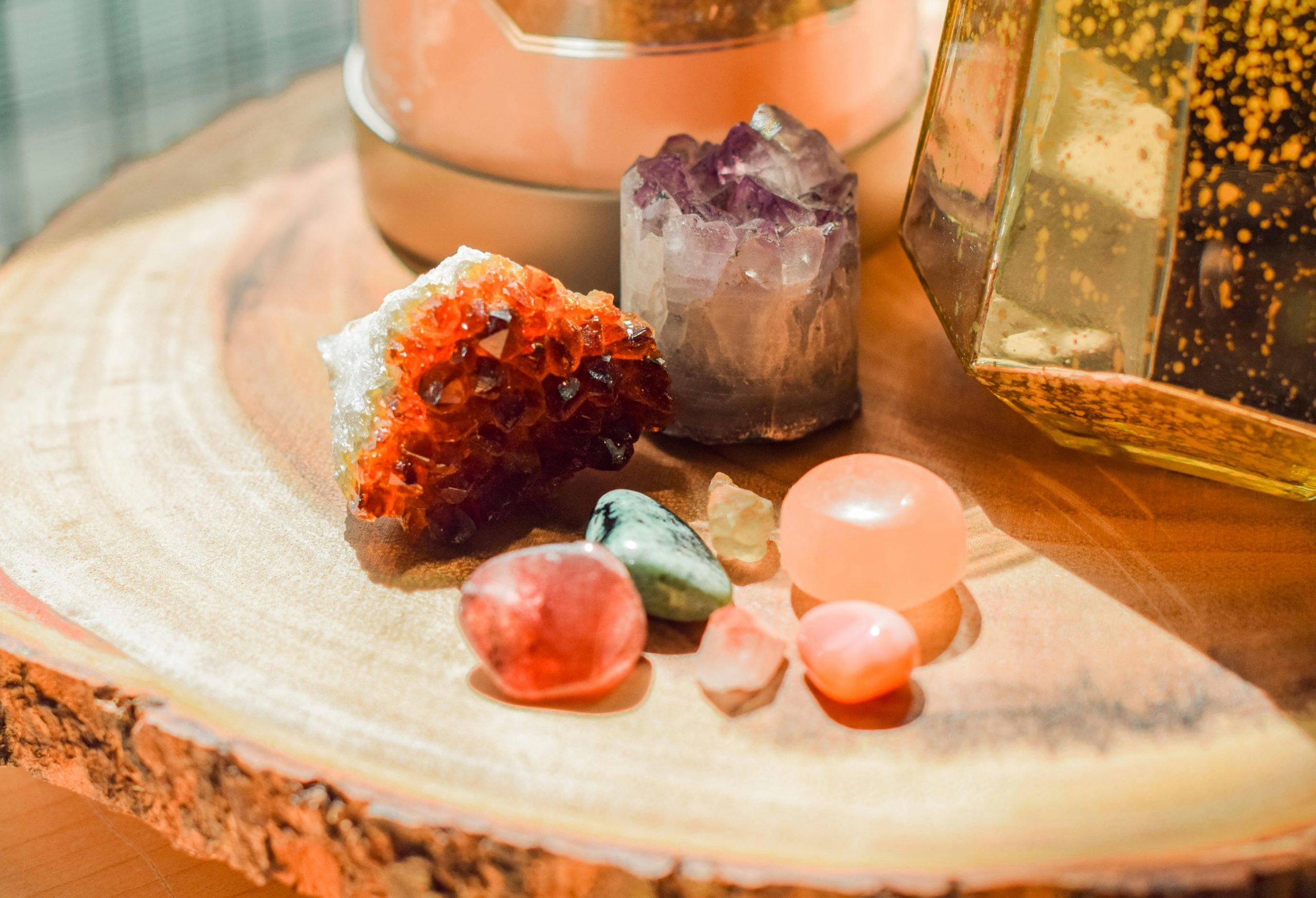
In doing this, I realized that the effectiveness of these mantras depends, to some degree, on the conviction of my spiritual beliefs—which does fluctuate at times. That led me to create a set of phrases I now chant regularly at my home altar. After significant reflection and refinement, here is my curated list:
- Let me live to create and experience the Universal Self in its fullest expression.
- Let me honor the appointed times of life by responding with presence and care.
- Let me recognize that the mindstream I inhabit is eternal.
- Let me act knowing that every choice generates consequence.
- Let me trust that this consequence reaches beyond my body, touching the eternal flow.
- Let me meet difficulty fully, knowing that the greater the pain and doubt, the deeper the ripples of karma and the fuller the invitation for presence.
- Let me trust the middle way, even when I feel insufficient, knowing that presence now carries me where I need to go.
- Let me honor spiritual practice as inherently worthy, claiming its value simply by participation and attention.
- Let me practice repentance with courage, affirming it as the path that transforms destructive karma into the cause for awakening.
When chanting these, I pause after the third word. If I’m in the car or another setting and trying to steady my equanimity and resolve, I often just repeat the first three words of each phrase meditatively, trusting that the full meaning follows from prior practice.
I really can’t overstate the impact this has had on my life. It might sound like an exaggeration, but I genuinely feel invincible—not in the sense that I won’t experience pain or emotional discomfort, but in that I no longer fear them. It has become almost automatic to turn to a mantra when frustration, anxiety, or shame arise.
Almost immediately, I can settle into a bit more equanimity, respond more skillfully, and sometimes even find a sense of joy within the discomfort. At times, it feels like playing a challenging level in a video game or working through a difficult puzzle. The difficulty is still there—and still unpleasant in some ways—but it also becomes engaging: something to meet, rather than something done to me.
I’ve experienced glimpses of this mindset before through meditation, but this practice has brought it off the mat and into everyday life in a way that finally sticks.
Namaste.